Creating demand for green hydrogen through the production of low-carbon chemicals & fuels
COOloop is pioneering a breakthrough catalyst that converts captured CO₂ and green hydrogen directly into ultra-low carbon ethanol - creating demand for green hydrogen by unlocking transport fuel compliance markets
We create demand for hydrogen through the production of low-carbon chemicals & fuels
Our proprietary MOF catalyst converts captured CO₂ and green hydrogen into ethanol in one step.
Inspired by the 2025 Nobel Prize–winning metal–organic framework technology, COOloop’s novel catalyst enables direct conversion of captured CO2 and green hydrogen into ethanol. It combines high selectivity, high yield and modular scalability to deliver ultra-low carbon and compliance-ready ethanol.
A legally mandated market worth €9 billion by 2035
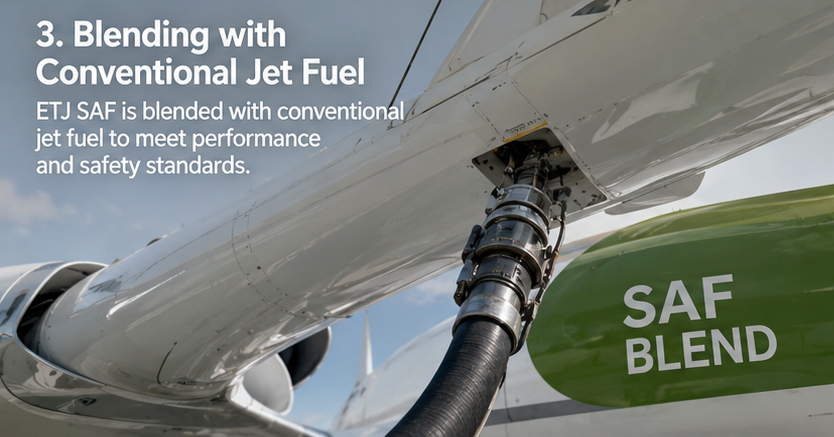
e-SAF demand is expected to reach 1 Mt by 2030 and 3 Mt by 2035. This huge demand is being driven by UK and EU mandates to blend e-SAF with conventional jet fuel. Compliance is non-optional. Airlines are mandated to blend e-SAF from 2030, scaling to 35% by 2050. Synthetic ethanol via Alcohol-to-Jet is the most efficient compliance pathway to meet these targets. Road and marine transport fuels also contribute to this €9 billion market, with e-ethanol being the ideal fuel blend to meet mandates.
TAM for e-SAF = €9bn by 2035
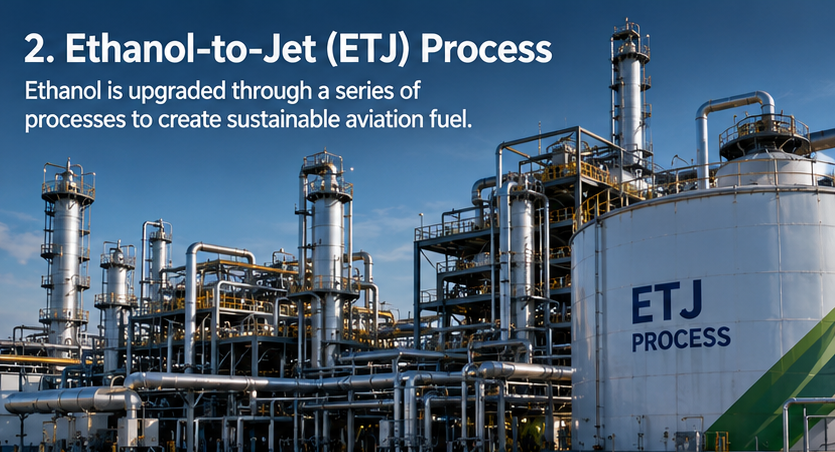
Synthetic ethanol-to-jet is the compliance pathway
Ultra-low carbon ethanol is the missing feedstock
[Why COOloop Wins]
Direct route. Carbon source flexibility. Scalable.
COOloop turns captured CO₂ and hydrogen directly into ethanol through a patented MOF-based catalytic process. The result: a synthetic route towards ultra-low carbon ethanol, that is a drop-in for ethanol-to-jet processes for e-SAF production.
Our patented technology offers a direct CO2-to-ethanol route, a single-step reaction pathway that simplifies industrial plant designs and reduces capital costs
Our modular reactors are designed for biogenic CO2 (durable long-term under EU rules) but also compatible with industrial point-source CO2 for near-term margin.
[The Team]
Experience that bridges science and industry.
COOloop is led by a team combining deep industrial experience with cutting-edge catalysis research.





.png)